Reimagining the Pack: Wipes Packaging that’s Smart, Sustainable, and Shelf-Ready
The image of a standard plastic film pouch of wet wipes is rapidly evolving.
Driven by a global imperative to reduce single-use plastic waste and a desire to enhance user experience, the packaging segment of the wet wipes industry is undergoing a period of intense innovation. The pack is no longer just a functional moisture barrier; it is now a critical touchpoint for communicating sustainability, ensuring product efficacy, and even integrating digital connectivity. Manufacturers are rethinking materials, designs, and functionality to create packaging that is truly smart and sustainable.
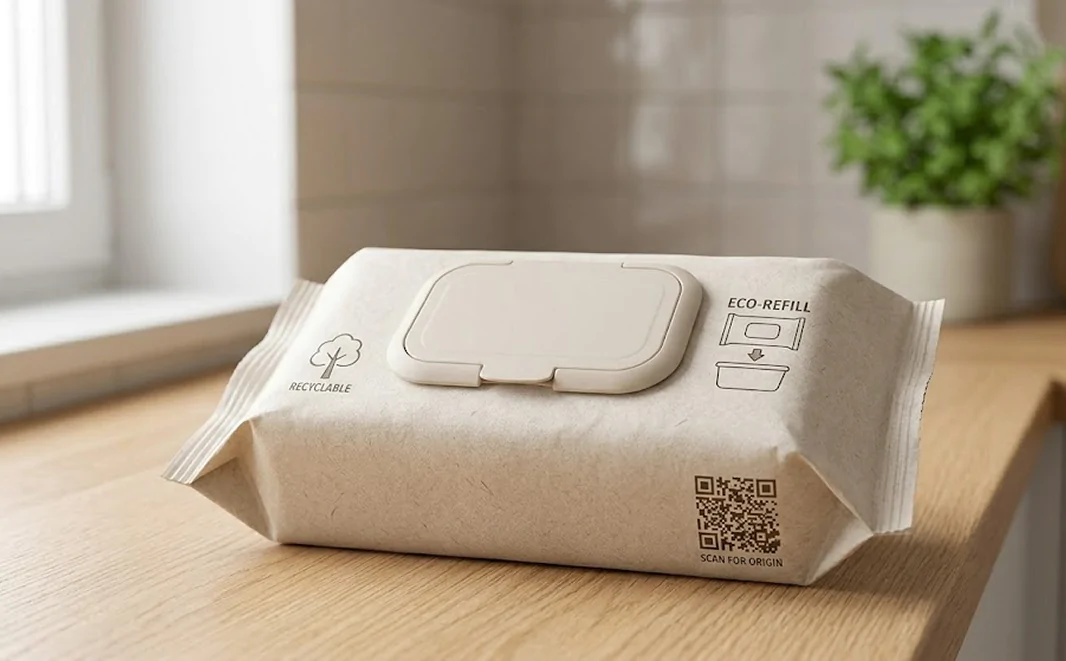
The most visible change is the shift away from standard flexible plastic films towards eco-friendly alternatives. We are seeing a new wave of packaging made from recycled content (PCR), bio-polymers derived from renewable sources, and even sophisticated paper-based composites that are recyclable and offer a distinct, matte texture, as seen in the image. The goal is to move towards a circular economy for packaging, where the pack itself can be easily re-processed, reducing landfill waste. This “green” transition is crucial, but it must be achieved without compromising the barrier properties that keep wipes moist and prevent microbial growth.
User convenience and product preservation are also driving design changes. The industry is moving from simple peel-off stickers to high-performance, integrated rigid flip-top lids, often made from recycled plastic or plant-based materials. These low-profile lids provide a superior seal, are easier to open and close, and maintain moisture content better throughout the product’s life. Furthermore, a major trend is the rise of refillable systems. Retailers and consumers are increasingly adopting durable tubs or dispensers that can be replenished with “refill pouches,” which use significantly less material than primary packaging, thereby reducing overall waste.
The “smart” dimension of packaging is arriving. The integration of QR codes, RFID tags, and NFC technology is transforming the pack into a gateway for transparency. Consumers can scan a QR code to access detailed information about the product’s origin, the raw materials used, independent certifications, and even disposal instructions (e.g., whether it is truly flushable or needs to go in the trash). This connected packaging helps build brand trust and combats greenwashing by providing verifiable proof of environmental claims, making the pack as intelligent as the product it contains.