
Velocity and Precision: How High-Speed Manufacturing is Reshaping the Wipes Landscape
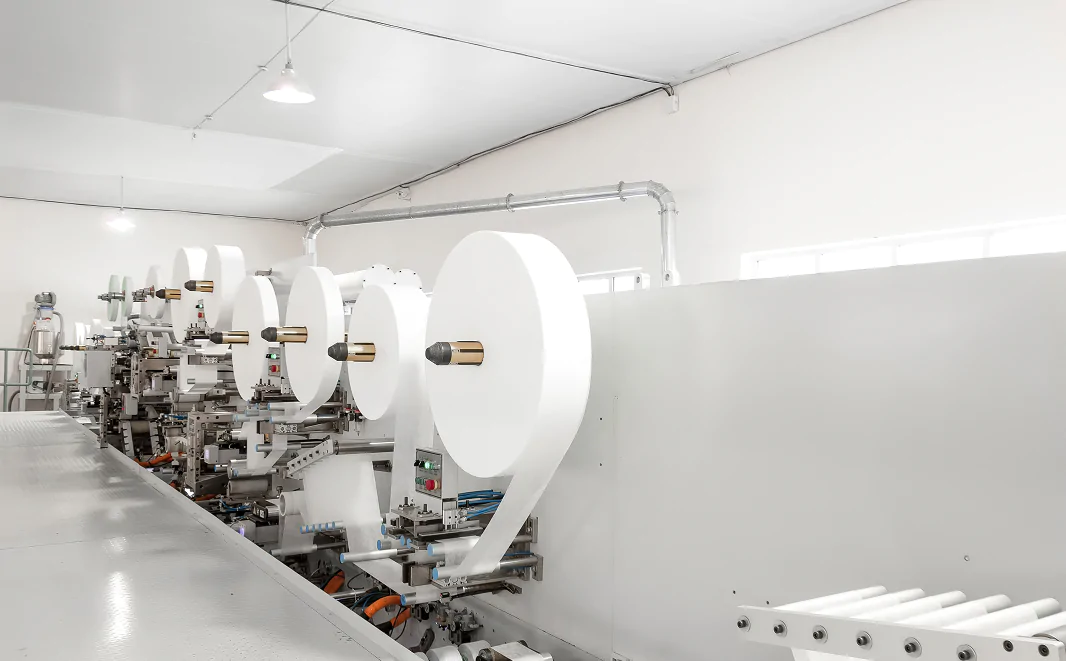
To meet this volume while maintaining razor-thin margins, manufacturers are turning to advanced engineering. The image of the factory floor is being redefined by ultra-high-speed converting lines, where nonwoven material moves faster than the eye can track, transformed from a raw web into a finished, folded, and packaged product in a fraction of a second. This velocity, coupled with extreme precision, is the new standard.
In modern manufacturing, every millisecond counts. High-speed converting lines are the heart of a wipe factory. A giant roll of nonwoven fabric (often Spunlace or CPC) is loaded at one end. At speeds exceeding 500 cuts per minute for some products, the machine unwinds, slits, folds, wets with precision dosing, cuts to length, and stacks the wipes. Specialized folding boards create complex interleaved patterns (like Z-fold or pop-up) that ensure user convenience. The integration of high-speed robotics at the end of the line for stacking and primary packaging further reduces labor and increases throughput.
Speed is useless without control. Inline quality control is now non-negotiable. Advanced vision systems use high-resolution cameras and machine learning algorithms to inspect 100% of the production in real-time. They detect defects such as improper folds, contamination, incorrect wetting, or misaligned cutting. Defective products are automatically rejected without stopping the line. Furthermore, sensors monitor critical parameters like liquid dosing accuracy and web tension, ensuring consistency across every single wipe, maintaining regulatory compliance (especially for medical or disinfectant wipes).
The manufacturing landscape is also adopting Industry 4.0 principles. Machines are networked, generating massive datasets. This data is analyzed to predict maintenance needs, optimize energy consumption, and identify bottlenecks. The shift towards “smart” manufacturing allows operators to visualize the entire production process from a central console, making real-time adjustments to maximize overall equipment effectiveness (OEE). For the wet wipes industry, manufacturing technology is no longer just an operational necessity; it is a core competitive advantage.